Locked, Loaded, and More Powerful Than Your Main: The Rise of the Private Account Takeover
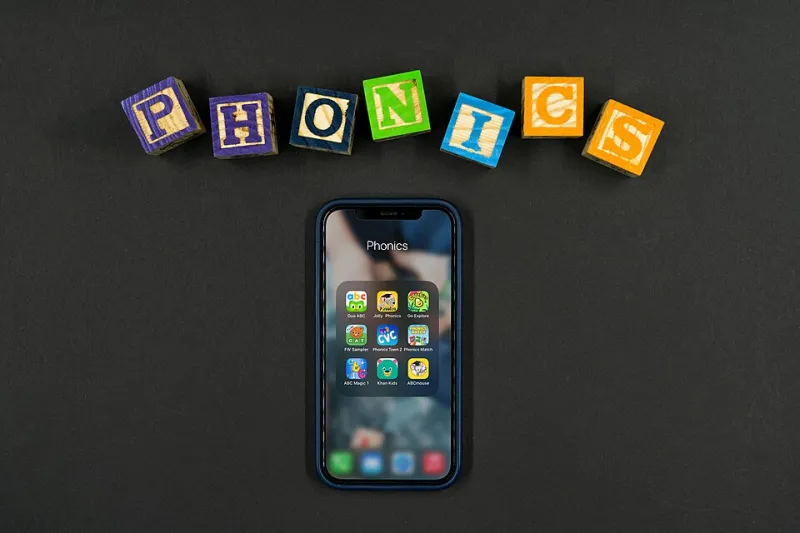
Photo: perpetual.fostering; https://perpetualfostering.co.uk/, CC BY 2.0, via Wikimedia Commons
Here's a fun little paradox to ruin your Tuesday: the most influential accounts on the internet right now are ones you literally cannot see. No follower counts. No public metrics. No algorithm-bait captions. Just a little lock icon, a follow request button, and the quiet hum of a community that is actively, aggressively not for you.
Welcome to the era of the private account power move — where the real culture gets cooked behind closed doors, and your public feed is basically just the leftovers.
Your Public Account Is a Billboard. Their Private One Is a Speakeasy.
Let's be honest about what most public social media accounts have become in 2024. They're polished. Optimized. Carefully constructed to appease an algorithm that rewards consistency, hooks, and whatever trending audio dropped forty-eight hours ago. Public accounts are billboards — loud, visible, and ultimately kind of hollow.
Private accounts? Those are speakeasies. You need the right knock to get in, the vibe is completely different once you're inside, and whatever happens there tends to feel real in a way that a perfectly lit transition video just doesn't.
Creators who run locked accounts describe them less like social media and more like group chats that accidentally became movements. The pressure to perform evaporates the second that lock goes on. Suddenly you're not posting for an audience — you're posting with one. And that distinction? It's everything.
The Gatekeeping Is Literally the Point
Here's what the internet got wrong for a long time: it assumed that more access always meant more influence. Open the doors, grow the following, maximize reach. Bigger is better. That was the whole playbook.
But something shifted. Audiences got exhausted by scale. A creator with 4 million followers started feeling about as personal as a Walmart circular. And the people who actually drove cultural moments — the early adopters, the terminally online tastemakers, the ones who decide what's cool before it gets a Buzzfeed listicle — started migrating somewhere quieter.
They migrated to locked accounts. And they brought the culture with them.
The gatekeeping isn't a bug in this system. It's the entire feature. When you have to request access to something, it instantly becomes more desirable. When not everyone gets in, the people who do feel a sense of ownership over what's being built. That ownership translates into engagement rates that would make a brand strategist physically weep. We're talking reply rates, saves, shares within closed networks — the kind of metrics that public accounts haven't seen since 2016 Instagram when your cousin's brunch photo got forty-seven genuine comments.
How a Locked Account Starts a Trend Without a Single Public Post
You've definitely experienced this without realizing it. A sound starts popping off on TikTok and nobody can quite trace where it came from. An aesthetic suddenly shows up everywhere and the origin story is weirdly murky. A phrase enters the group chat and three days later it's on a late-night monologue.
Chances are decent that it started in a private account. Or a series of them.
The mechanics are actually pretty simple. A creator posts something raw and funny to their locked account — maybe 800 approved followers, all of whom are genuinely engaged. Those followers screenshot it, share it in their own group chats, repost it to their own stories. The content hops from private network to private network until it reaches someone with a public platform who posts it without full context. By the time it goes truly viral, the origin is untraceable, which somehow makes it feel even more organic.
This is the underground railroad of internet culture, and it runs entirely on trust and tight communities.
Brands Are Absolutely Panicking (And It's Hilarious)
Now here's where it gets genuinely funny. Brands have spent the last decade building entire departments around social listening — tools that scrape public posts, track hashtags, monitor sentiment at scale. They've gotten pretty good at identifying trends early and jumping on them before the moment fully passes.
Private accounts have completely broken that infrastructure.
You cannot scrape a locked account. You cannot track a hashtag that lives exclusively inside a closed community. If the next big cultural moment is brewing in a private Instagram with 600 followers in Atlanta, a brand's $200,000-a-year social listening software is going to find out about it at the exact same time as everyone else — which is to say, too late.
So what are brands doing? Honestly, a mix of things, most of them awkward. Some are paying micro-influencers to essentially act as cultural spies, getting approved into private communities and reporting back on what's gaining traction. Others are trying to build their own private brand accounts — a move that is almost universally received as the social equivalent of a 45-year-old trying to use slang they heard their kid say. A few savvier ones are simply waiting at the door, requesting access and hoping the community lets them in.
The ones that actually crack it tend to do so by being genuinely useful to the community rather than extractive. Show up with something real, don't immediately pitch a product, and maybe — maybe — you get to stay.
The Authenticity Economy Has Gone Underground
There's a bigger story here about what audiences are actually hungry for in 2024. People are not tired of social media. They're tired of performed social media. They're exhausted by content that feels like it was assembled by a committee to maximize watch time. They want the messy, the honest, the stuff that feels like it wasn't meant for them — which is exactly why the stuff that isn't meant for them has become so magnetic.
Private accounts are basically running the authenticity economy right now, and they're doing it from behind a lock icon with zero ad revenue and absolutely no brand deals.
The creators who understand this are playing a longer game. They're not chasing the algorithm on their public accounts anymore — they're using those accounts as a front door and treating their private communities as the actual house. The public feed gets the highlight reel. The locked account gets the real conversation.
And in 2024, the real conversation is where all the power lives.
So What Does This Mean for the Rest of Us?
If you're a creator still betting everything on public reach and follower counts, it might be time to zoom out. The most valuable thing you can build right now isn't an audience — it's a community. And communities, historically, do not thrive under stadium lighting.
Throw a lock on something. Curate who gets in. Stop performing for the algorithm for five minutes and see what happens when you post for actual human beings who chose to be there.
The speakeasy is open. You just have to know where to knock.