Rest in Cringe: The Internet's Twisted Tradition of Roasting Dead Trends Into the Afterlife
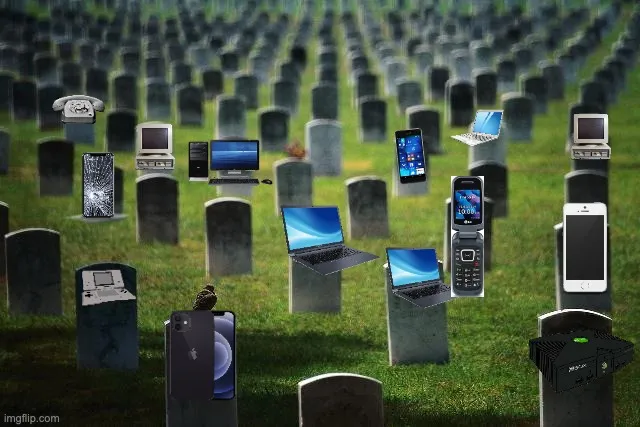
Photo: funny tombstone graveyard smartphone meme culture, via i.imgflip.com
There's a specific kind of chaos that happens when the internet decides a trend is officially over. The videos stop getting shares. The audio gets buried. The hashtag flatlines. And then — right when you think it's finally gone — the memes start.
Not celebration memes. Not nostalgia memes. Autopsy memes.
Somewhere between the peak and the permanent cringe, the internet developed a whole second act for dying trends: publicly dissecting them, dragging their corpses through the comment sections, and somehow making the post-mortem more viral than the original moment ever was. It's messy, it's ruthless, and it is deeply entertaining. Welcome to the Trend Graveyard. Population: everything you thought was cool three weeks ago.
The Death Cycle Nobody Talks About
Here's how it usually goes. A trend blows up — a dance, a sound, a challenge, a phrase. It hits TikTok, jumps to Instagram Reels, leaks into YouTube Shorts, and suddenly your aunt is doing it wrong at a family barbecue. That's usually the moment the internet quietly files the death certificate.
But the actual burial? That's a whole production.
Once the culture decides something is cooked, the mockery format kicks in almost immediately. You'll see the "POV: It's [insert trend] and it's already mid" videos. The "this is what you looked like" stitches. The "okay but why did we all do this" confessional TikToks from creators acting like they weren't posting that exact same content two weeks prior. The trend doesn't just die — it gets a roast, a eulogy, and a tombstone carved with its own most embarrassing clip.
The Trends That Got Famous for Failing
Some trends become more iconic in death than they ever were in life. Take the "Silhouette Challenge" from early 2021. At its peak, it was genuinely artistic — creators using a red filter and a doorframe silhouette to make something visually striking. Then came the tutorials on how to "remove the filter," the privacy panic, and eventually the full internet pile-on. The mocking content that followed racked up views that rivaled the original trend itself. The challenge became less famous for what it was and more famous for the conversation about what went wrong.
Or look at "Beige flags" — a dating trend that briefly had everyone posting their partner's weird quirks as charming personality markers. The second wave of content, where people started making fun of how quickly the trend became performative and forced, arguably got more engagement than the earnest original posts. The meta-commentary became the content.
Then there's the entire graveyard section reserved for brand attempts at viral moments. Every time a corporation tries to hop on a trend six weeks too late, the internet throws a party over the corpse. Those posts don't just fail — they get screenshotted, reposted, stitched, dueted, and discussed in YouTube video essays. Death by delayed trend-chasing is its own genre now.
Does Mocking a Trend Kill It Faster or Keep It Alive Longer?
This is the actual debate happening in the background of every "this trend is so cringe now" comment section, and honestly, there's no clean answer.
On one hand, mockery is attention. And attention — even the "lol remember this?" kind — keeps something circulating. Every time someone posts a "the way we all did the [blank] challenge like it was normal" video, they are technically reviving the trend for a new audience who missed it the first time. The Graveyard content is still content. The algorithm doesn't care if you're celebrating or clowning.
On the other hand, the roast era also acts like a hard timestamp. It signals to anyone who hasn't gotten the memo yet: this is over, do not post this, you will be mocked. For trends that were already fading, the mockery cycle can accelerate the exit by making participation feel socially risky. Nobody wants to be the person who got stitched into a "they're still doing this??" compilation.
The honest answer is probably both, depending on the trend. Some get a lifespan extension through ironic resurrection. Others get nuked so thoroughly by the mockery cycle that even mentioning them unironically is a personality red flag.
The Creators Who Have Mastered the Post-Mortem
Here's where it gets genuinely interesting from a creator strategy perspective: some people have built entire audiences out of living in the Trend Graveyard. Their whole thing is being the ones who show up after the funeral to give the eulogy nobody asked for.
These creators have figured out that the commentary lane is often safer and more sustainable than the participation lane. Trends come and go, but the reaction to trends has a longer shelf life. You can still post a "can we talk about why [2022 trend] was actually unhinged" video in 2025 and pull solid numbers, because nostalgia and secondhand embarrassment are evergreen emotions.
The risk, of course, is becoming the person who's always late to the party — not because you missed it, but because you only show up to clean up afterward. That positioning works until your audience starts wondering if you actually have taste or if you just wait for everyone else to decide what's worth clowning on.
Why We Can't Stop Attending the Funerals
There's something deeply human about the Trend Graveyard ritual, even when it's playing out through TikTok duets and Twitter ratio threads. It's the internet's version of collective processing — a way of acknowledging that yes, we all participated in something, and yes, in hindsight, it was a little bit unhinged, and that's actually kind of beautiful?
The mockery is also a bonding mechanism. "Remember when we all did that" is the same energy as old friends recounting embarrassing high school moments. The cringe is the connection. You can only roast something you were present for.
And honestly, the Trend Graveyard keeps the internet from taking itself too seriously, which — given how seriously the internet takes itself — is a public service. Every viral moment that becomes a meme about its own failure is a small reminder that nothing online is as permanent or as important as it feels in the moment.
The trends die. The roasts live forever. And somewhere in that cycle, something new is already being born that will eventually earn its own tombstone.
Rest in cringe, king. You deserved better. Kind of.